There is a common image which comes to mind when thinking of synthesizers—long rows of nobs and dials, often accompanied by keys on a MIDI keyboard. This imagery immediately discourages a large portion of people from ever trying their hand at something which is actually quite fun in its final result.
Technologies
Matter.js, Socket.IO, Express
Date
March 2020
Want to create sound by whipping a virtual rope? Now you can 🪢
Squigli is a digital toy used to create sound using rope physics.
Audio design is the creation or reappropriation of sound to suit a variety of needs. This could be the hum of a lightsaber to imply contained energy, or the bleeps and blops which are often associated with robots to give them a personality. It also crops up ever-so-often in interactive experiences where ambience is key.
If you played Doom 2016, you would certainly appreciate the looming not-quite-metal-but-reminiscent-of-it ambient soundtrack (which you can watch an hour-long presentation on over here!)
It’s also present in smaller, almost invisible ways, such as the tiny bleeps when you talk to Siri or Google Assistant, or perhaps the little blip sound your car makes when you close it via the key fob, almost as an auditory nod to say “Yes, you may leave now”.

With Squigli, I aimed to make this creation process just as playful and experimental as its result.
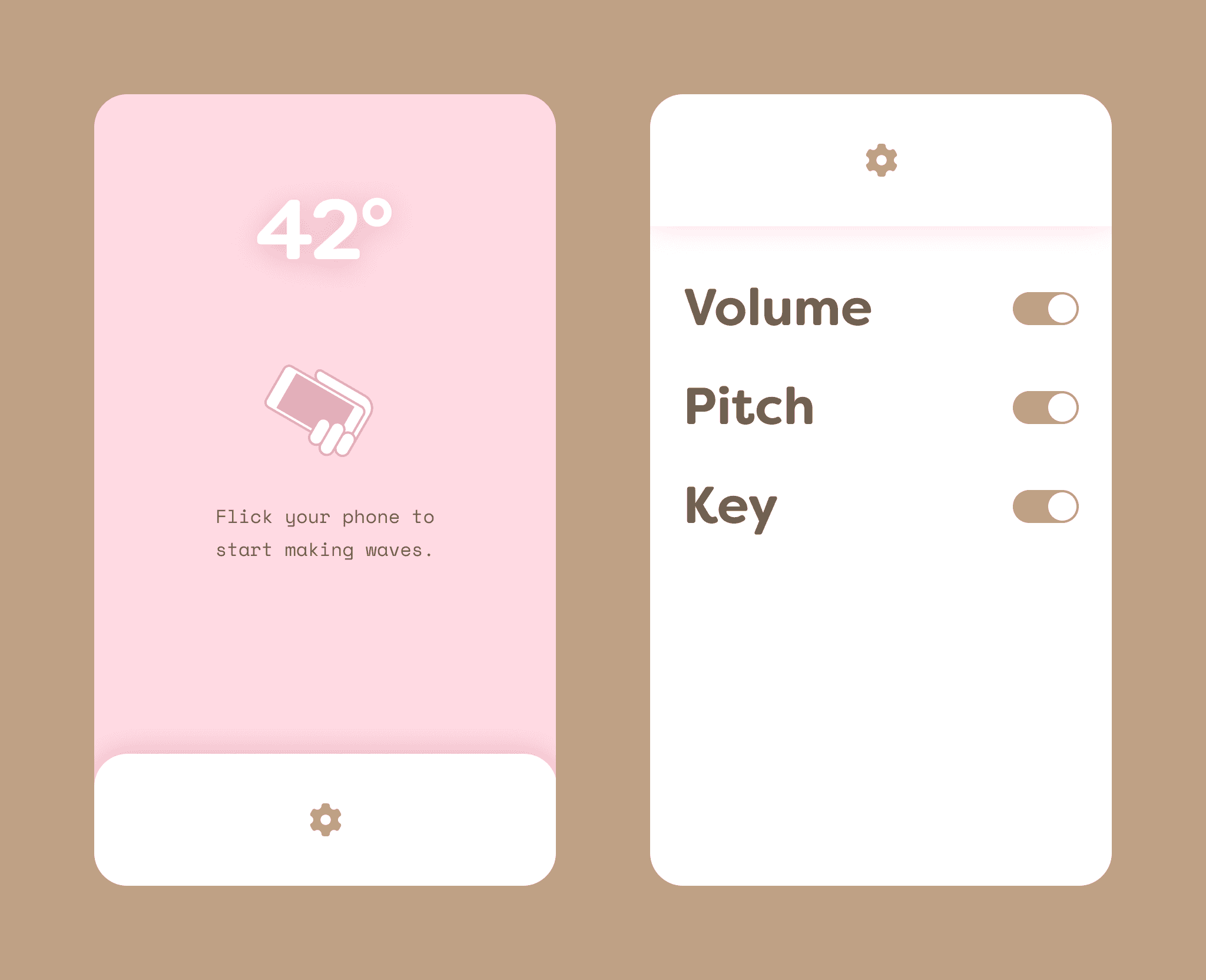
Instead of adjusting bezier curves on a screen, it presents the designer with a rope. The rope acts as the common equalizer between people of all skill levels, as it makes this process as simple as “feeling for the mood” of what they’re going for and gesturing accordingly, almost like the conductor of an opera.
All this is to say that it adds a level of intuition which is missing in digital audio synthesizers.
To see it in action through a very, very serious use case, I tested out the tool by “voice acting” my boi BB-8 from Star Wars 🤖
Want to create your own questionable robot companion noises? Try it out yourself!